
You are currently browsing the category archive for the ‘Developing a Heart for the City’ category.
Are you tired of the talk and despair about city kids and their communities? Violence, drugs, loneliness, divorce — you know the list. Have you heard it all, done it all, seen it all, and you still wonder, “Am I even making a difference at all?” Does this sound familiar?
You’ve made a serious commitment to do whatever it takes to make a difference in the lives of kids today. You are visiting kids on their turf, tutoring, and teaching. You even try to be a mentor. How are you doing? Any frustrations… failures or victories?

We all agree — we have cried, talked, and complained for far too long. Finally, many Christian workers are saying, “Enough is enough, today’s kids are in pain!” They scream for answers and assurance that what they do will make a difference.
Sometimes it seems like “that” other program or the staff from “that” ministry are the ones really making a difference. I know… it’s tough. But Jesus gave us an example to follow so we can make that difference. 1 Peter 2:21 says: “For Christ also suffered on our behalf, leaving us an example, that you should follow in His steps.”
Suffering: The correct strategic plan?
Several men whom I respect say, a real leader is one who enters into the suffering and pain of society. This type of leader takes on the burdens of those where he ministers. What was Jesus’ ministry strategy? He intentionally went through Samaria and other cities. Jesus hung out and reached out to sinners. Jesus supplied spiritual and physical needs from the least to the greatest. Jesus had only a few disciples but His kingdom endures forever.
Do you want to minister like that? There is a refreshing movement that blows through the urban streets of America today. It’s a ministry life-style, which simply enables you to live with and to be enriched by the indigenous people where you minister. Are you engaging this movement?
Make a Comment
If you work with city kids and have a great idea or a major challenge, please share it by making a comment or offering a question. Provide a ministry name and link of those making a difference in your city.
Over the past two years I’ve been captivated by the Scriptures and conversations with other Christians about the reality of authentic revival and spiritual transformation of our city. The discussions were usually filled with passion and restlessness. Leonard Ravenhill says in Why Revival Tarries, “The two prerequisites to successful Christian living are vision and passion, both of which are born in and maintained by prayer.”
A deep longing for a fresh move of God was evident in those people. I began to intersect with others from many perspectives and walks of life, which had passion, vision, and compelling prayer lives. Truly a revolutionary spirit was emerging in Durham. Chris Rice and Emmanuel Katongole called this a “deep restlessness about what it means to live faithfully in a broken and divided world” in their book, Reconciling All Things. Embracing this reality I began to investigate my ministry history with CEF as well as my own life.
Reflection

Despite the great work of churches and ministries over the years, why was I not sensing an imminent revival ― a change in apathetic attitudes outside or inside the church? Why was there little evidence of biblical transformation, in which I believed in and hoped would come? Was it too late? What was missing? Was I even thinking clearly or biblically?
I had no conclusive answers for these questions. I self-examined my own vision, passion, and prayer life by asking: Was I contributing to this spiritual malaise? Could in fact, our ministry be partly responsible for God withholding His blessing to our city? But during this struggle, I was soon reminded in another discussion, “Do not mistake God’s presumed inactivity as His lack of involvement or interest in our city.” His Words in Psalms 11-19, Isaiah 57-61, Mark 8, Luke 10, and John 4 as well as from trusted friends began to bring me needed wisdom and a clear understanding about what troubled me. I was also blessed with how to evaluate our ministry teams and an action plan to implement ― it was simply ten biblical expressions of God’s Kingdom.
Realization
After the evaluation, questions were answered like: What was missing?
1. Focused prayer for spiritual transformation of the specific communities where we ministered.
2. Godly relationships with the indigenous people living in those communities.
3. A comprehensive, collaborative, and biblical ministry plan that fostered sustainability and Christian community development.
Evangelism with follow up and some special outreach events had been our plan through Child Evangelism Fellowship® for many years. It was done well. 80,000 lives were touched and heard the Good News and many of those received Christ as Savior during the past 17 years. But it was incomplete. Even when we conscientiously followed Micah 6:8 and Mark 16:15, I realized we were falling short of expressing the Gospel as Jesus had instructed His disciples to do when He sent them out to every town and place where they were to go.
Refocus
I realized the focus of Jesus ministry and the heart of God was on people. Their worth, dignity, and living situation dictated ministry. My vision was sharpened on how God valued the people we were reaching, even in the most resource-challenged communities of Durham. As our team refocused, no longer were the people seen as objects or goals of our ministry, but essential conduits and leaders for the transformation of their own communities.
During the past two years, both ministers and residents have been enriched when they prayed, blessed, listened, learned, and ate together. This biblically relational approach has allowed us more effective evangelism, discipleship, and leadership development. Spiritual transformation becomes evident when these ten expressions of the Gospel are implemented. Now everything CEF Durham does will be community-based and guided by these 10 Keys of the Kingdom.
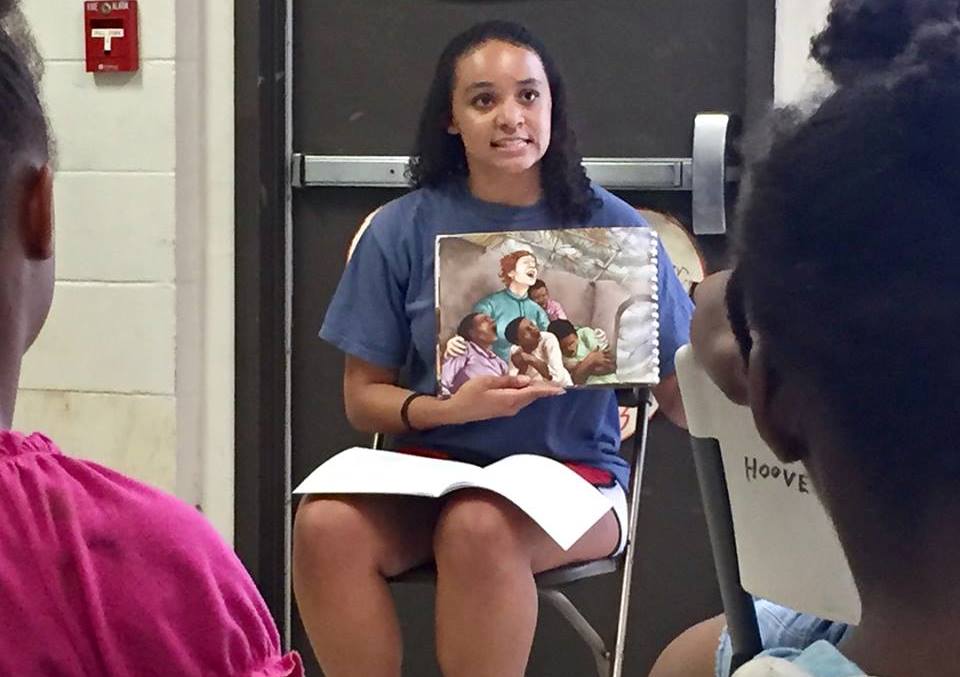
The urban missions BREAKOUT! (boot camp) will allow you to develop your heart for the people of urban America; move beyond missions trip rhetoric with diverse practical ideas; build bridges to urban communities with the Gospel; grow spiritually and worship together; create and daily adjust your mission team’s plan as you work in one community from 4-8 PM each day Monday-Friday; embrace your fears; and use your talents/interest as you minister.
Connect with Breakout! missions this Summer

together at a “Blacktop Games” events during the early Spring.


Registration DEADLINE is May 1st
Additional information about CEF, the Urban Center of Light, and Breakout! can be found at the following sites: CEF Durham and Facebook. Contact by mail at CEF Durham 801 Gilbert St. Suite #101 Durham, NC 27701
I recently dropped a question into various social networks asking, “Hey… is there any difference in teaching kids vs. ministering to them? What should be the focus if you desire spiritual transformation in the community?” This is how everybody from Durham to Chicago (written collectively) responded.
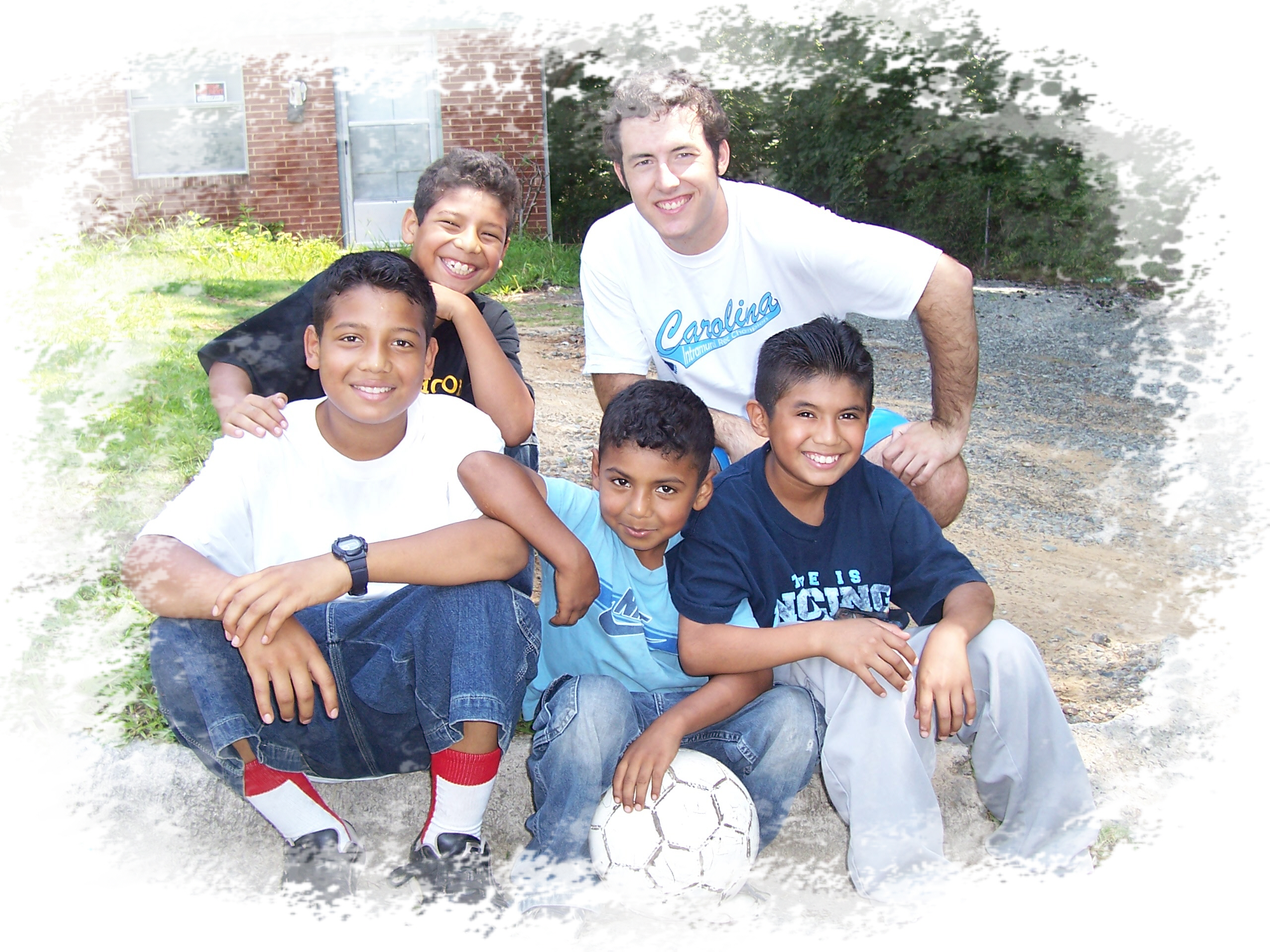
I don’t think there is a difference. Ministering is teaching and teaching is ministering. They both lead to spiritual transformation in the community. I like the “hang out with people in the community” idea, just like when we hung out with the boys in the hood. The thing they pointed out was “we just kept coming back.” Cool things do happen when you go hang with people in a non-judgmental, respectful, and listening type of way… I also think that you have to be part of the community and not just show up and be like here I am, listen to me. I think you have to not only meet their spiritual needs but their physical ones too; you have to meet them right where they are… build a real relationship.
Interesting… that’s exactly the way our CEF staff and local committee responds to city kids and communities everyday. The Gospel is central to everything we do, which transcends teaching, serving, helping, etc. Our approach to ministry can be framed with the 10 Keys to the Kingdom (above) and are based on Isaiah 58, 61, and Luke 10. This journey gets more exciting with each step!
City kids, who respond to the Gospel: The Message of Salvation, usually have little biblical foundation. Consequently many need to have the truths of the Gospel reiterated to help bring about real spiritual change in their lives and to help them relate to God in a personal way. City kids must hear the truth over and over for establishing this foundation.
A Different Strategy
 So, how do we present the Gospel to city kids? Several years ago the Lord gave us something thousands in our area know as the 7 Most Important Things in the World—a list of seven simple phrases that all children need to know and can understand.
Knowing the value of repetition, the 7 Most Important Things in the World (or 7MIT) are taught to every child, four years old and up. Teachers give progressive instruction and drill their students on the 7MIT every class session, similar to learning a mini catechism. Every child is expected to master the list and their truths.
An Urban Appeal
The 7MIT are simple, easy to learn, yet profound. They become the central and foundational points of reference for all teaching. We have developed a song to go with this list and the kids love it! They always want to sing it more than once.
As city kids respond to the Gospel during counseling I hear them answer questions based on the 7MIT. Why is Jesus the only way to Heaven? They answer, “Because of numbers 2, 4, and 5, Jesus never sinned, Jesus died for me and Now Jesus lives!” The 7MIT is shouted in unison, sung with body movements, recited during game time, prayed and remembered in kids’ testimonies. Whether in the classroom or on the street a spiritual foundation is continuously being built.
Results are Real
Fridays are usually busy for me with last minute preparations. Lesson visuals, props for object lessons, and game supplies must be ready for the next day. One particular Friday I needed to make a quick run to the store for prizes. Unfortunately it turned out not to be quick.
It would not have been a problem, but Friday is the day I visit all the kids in my district who attend the Saturday event. I began to think this was not going to work. Maybe the kids would understand if I did not show up. I was going to be late and not have time to visit everyone anyway. But I had made a promise to God and to the kids that I would visit every week.
I finally got out of the store, got into my car, picked up my student assistant, and rushed over to the inner city neighborhood. I explained the situation to him and we prayed for God to connect us with every child regardless of our situation. We had our promotional flyers in hand and darted out of the car. Because time was short, we agreed to divide up the list of kids and go in different directions.
Both of us had to maneuver around a large area, which had been barricaded by yellow crime scene tape, to get to the sixty apartment buildings in that neighborhood. Over a dozen police officers were present asking questions and showing a display of force. I began to wonder, if we would be able to visit even one child that day. However, with the excitement all the residents were outside.
We quickly began to ask people what happened as we handed them a flyer. Many were concerned for their kids. Others were angry and used profanity at the police. The kids told us that men were fighting in the street and one got stabbed to death. My heart was once again saddened that these children accepted such things as normal events. I mistakenly thought, “What good are we really doing? Did it matter to anyone?”
Immediately I got the answer to my question as I heard Mustafa and Quanisha scream, “Hey Mr. John!” I went over to talk with them and their mother.
After giving them and other kids a flyer I made sure they knew when to be ready for bus pick up the next morning. Everyone wanted to talk about the stabbing so I tried to listen knowing that I had to keep moving. As soon as there was a break in the chatter I asked if anyone had learned all the 7 Most Important Things in the World?
Mustafa spoke up saying, “I know them.” He rattled off each one in perfect order with no breaks or stumbles. Wow! That was amazing I said.
I asked Mustafa to explain the meaning of what he just quoted. He simply stated “Jesus is the One who saves us from our sins.” I asked him if he really believed that and he said yes. The loss of time and knowing that there were many other buildings to visit did not matter now. It mattered to 8 year-old Mustafa that we visited him.
I had the awesome privilege to hear Mustafa ask Jesus to be his very own Savior. We had only a short time to talk, but the weekly teaching of the 7MIT and the commitment he and his sister had to memorize them allowed both to hear the Word of God over and over before I visited that special day. Mustafa and his sister still live in the same crime-ridden neighborhood. We still visit. Now others are joining this movement to biblically resource Mustafa’s community and nine others in Durham. 7MIT resources are free and available at CEF Durham (near bottom of page).
I heard someone say that kids know the cost of everything, but understand the value of nothing. Even at the ages of eight and seven Miguel and Louis knew exactly the cost of every prize they received. Special gifts from adopting families at Christmas were easily sized up and compared against “stuff” other kids had. I wondered if these two brothers realized the generosity and kindness of these strangers. So I asked.
 Basically I asked, why aren’t you thankful? Miguel’s answer rattled the status quo Christian mind-set. He said, “Man those dudes don’t know me or what I like! Anyway, I can’t be seen with stuff like that. They [other boys] will laugh at me.” All I could think about was all the teaching he had heard, the time he spent with our staff, the places we had gone, and how appreciative his family had been. Was this the payoff? Honestly, I thought, why are we out here?
Ask yourself, what compels you — what motivates you to minister to city kids? Is it because there is a need and no one else seems to care? Or does it satisfy your own need for self-worth? The only thing that would really compel someone to labor unnoticed and without reward must be rooted in values, which are centered in Christ’s life. After pausing at Miguel’s answer, Jesus words flooded my mind, “Even so… even so… it is not the will of your Father, which is in heaven that one of these littles ones should perish.”
It caused me to check my motives and values, then ask myself, why are you working with these city kids year after year? What are your values? Don’t be afraid, take this urban values check up with me.
Do I Value Kids in the Inner City?
Are you committed to a philosophy that values the practice of biblical principles (James 1:26-2:1) and makes them operational in the lives of people? Is your life and ministry enriched by the city and it’s people, especially city kids (Matthew 18:14)? Miguel and Louis live in the worse Hispanic neighborhood of our city, yet the time spent with them enabled ministry growth to other children as well. Workers grew to love the children, their families, and their culture.
Do I Value becoming Vulnerable?
Your ministry must be directed towards and also include the vulnerable, “the least of these my brethren.” Do you seek to confirm the human dignity that is due to people in all communities? Risk means being willing for a new approach or task — but not the relationships — to fail as a result of a commitment to creative solutions and leadership development. Miguel and Louis were visited at their home each week and workers got to know their mom. She offered tamales and other food. The workers became her friend. They learned and incorporated Mexican culture into their overall outreach. Not all kids enjoyed the additions. Some stopped attending.
Do I Value Discipleship?
Do you show, affirm, and support grass-roots, indigenous leadership development? This would be a biblical philosophy of discipleship, which expects new converts to become leaders within their own neighborhood. Will you personally disciple one or several city kids for one to fifteen years? Miguel and a group of his friends will have contact with our ministry for three more years, then given the opportunity to be a teen leader with us.
Do I Value Empowerment?
There must be a willingness to trust and include the cultural perspectives and capabilities of various communities you target for ministry. Do you seek people and churches from these communities for the spiritual welfare of city kids?
As workers made themselves available, Miguel and Louis’ mom was able to share her concerns for her family. Tutoring for the boys, a better understanding and trust of American culture, and becoming connected to a Hispanic church were the results.
Do I Value Reconciliation?
Do you believe that reconciliation must first happen between God and man through the work and shed blood of the Lord Jesus Christ? Secondly, do you believe that we must seek reconciliation with his fellow-man? Miguel is still working on this one. His mom and our workers have begun the process with some early success. Commit yourself to ministerial partnerships to reach city kids that include diverse individuals, agencies, and churches.
Well, how did you do? Which values were your strongest? Weakest? Regular check ups are good for staying healthy as you compete in this game. God places high value on city kids. So keep your game on till next time… Grace and Peace.
 Church and state
“I don’t care what you teach or believe as long as you keep it inside the four walls of your church.” In essence, many people are saying, “Your church belongs to you, but the public square belongs to us.” Sound familiar? Is this really the way things are today? Yet, I hear Chris Rice
repetitively saying, “The way things are is not the way things have to be.”
Church in the marketplace
Will the Church allow its voice to be intimidated into silence, or will our spiritual leaders once again take their prophetic role in our society and speak truth outside the four walls of the church? Will the leaders of the church once again speak the unchanging and unchangeable truths of God and His Word into the marketplace?
Almost everyday of every week you will find CEF staff, volunteers, and collaborating believers speaking and serving boldly in the Durham marketplace. Come join us Monday afternoon Jan. 18th for the “Martin Luther King Day of Service” at Cornwallis Rd. Apts. We’ll be speaking and serving that day too.
Are you ready to go inside? Good! But there are a few things you should know. First, this is not going to be a sightseeing tour of inner-city ministry. Second, ministering to city kids is real and risky but it places you where God is at work. Third, read Psalm 107:23-24 because it God saying, “This is the essence of life and the way ministry should be.” If you’re ready… These are the core lessons to learn and apply, which are necessary for the journey some call: “inner city ministry.”
Lesson #1
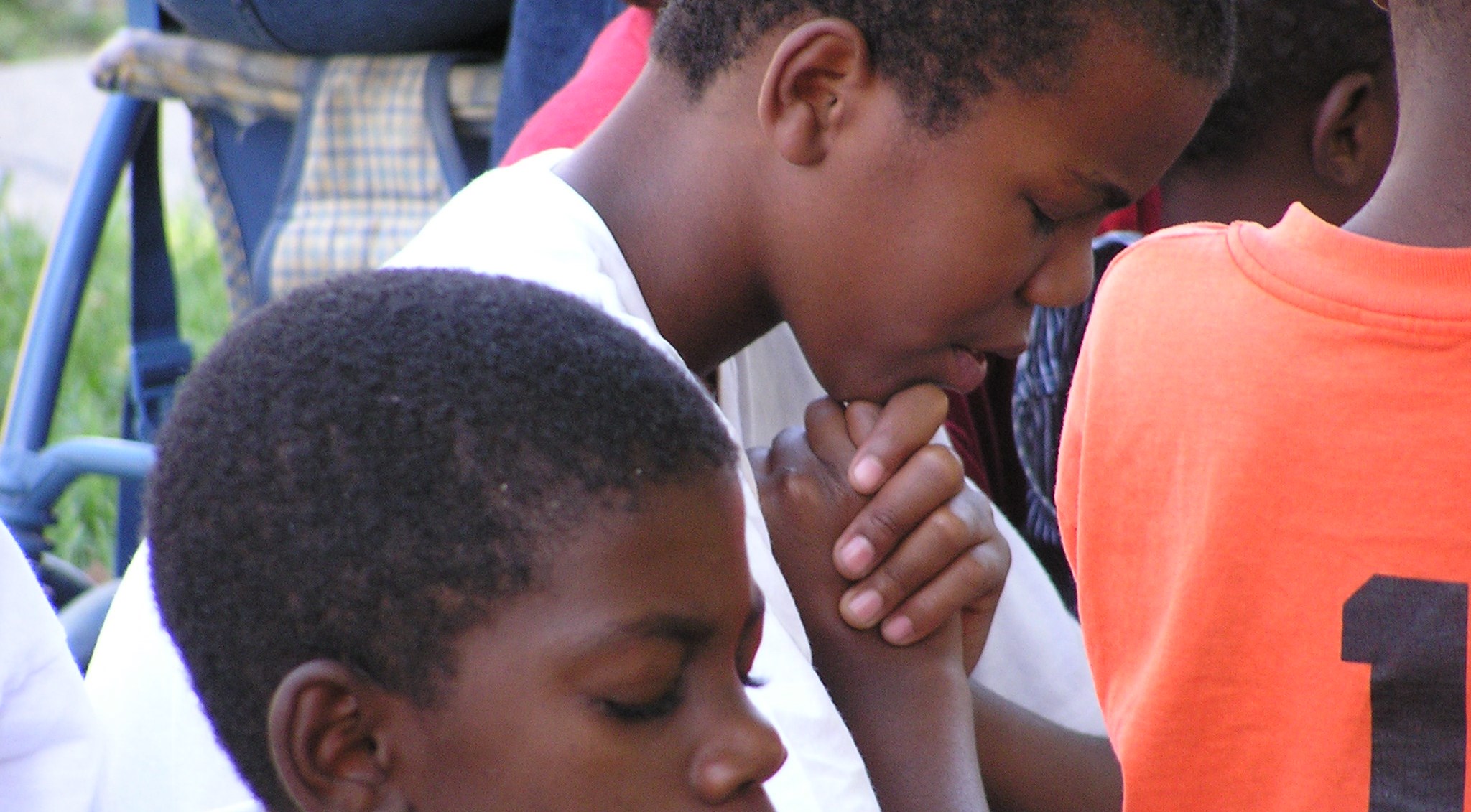
God is good in the hood. Many kids and their families who live in inner-city neighborhoods are aware they have extreme problems. They wish things were different. Many of these families respect God’s Word and believe in prayer. They respond to Christians who bring them help and hope. Often their response is temporary. But yours must never be.
Lesson #2
If you care enough to take the love of Christ inside you will have to prove it by loving city kids and their families. In Grace Matters, author Chris Rice quotes Lem Tucker, “He who has the greatest truth must show the greatest love, which is the greatest proof.” You must prove your love over and over for others to know you really care. Many well-meaning Christians have done great harm in the city by making promises to kids then leaving and never returning. If you love your city and the families living there you must keep your word.
Lesson #3
Your primary focus will be to build personal and ministry relationships. These relationships take time to develop and must be biblically based on equality, grace, trust and endurance. This is accomplished by visiting city kids and their families regularly in their own neighborhood. Soon your consistent presence will prove to their families that you care.
Lesson #4
Effective ministries to urban kids have learned that in order to impact children you must visit them.
- Visits connect you with the child’s world—“You’re not afraid.”
- Eighty percent of the children who attend your events come because you visited—“You let me know.”
- Visits expand your personal ministry to each child—“You care about me.”
- Visits project an image/testimony in the community—“Thank you for helping my kids.”
Spencer got a home visit every week. Soon he and his sister started attending Extra Good News, an inner-city Bible club in Durham, North Carolina. The faithfulness of his bus commander to visit, encourage and pray with the family led to Spencer becoming a teen helper, an active church member and later was involved in summer missions.
Lesson #5
Try these proven guidelines to successful visiting:
- Set a time every week to visit—your program should revolve around weekly visitation.
- Use a block-by-block approach to reach more kids.
- Keep a record of information on each child and his family.
- Visit every kid but spend extended time with selected individuals.
- Be prepared to share the Gospel, listen or lend a helping hand.
- Pray for children, parents and family needs.
Because a children’s worker followed this plan for weekly visitation, Nikki received help when she said, “My mom is always angry, I don’t know what to do.” Jade, a ten-year-old, had a heavy burden after watching the video Left Behind. She told her teacher, “I don’t want my mom to be left behind. Will you come tell her what you told me about Jesus?”
Floodgates for ministry burst wide open when you visit. Will you add regular visitation-home contacts to your city kids ministry? If so, you’ll take your game to another level.
 Kids everywhere love basketball – especially city kids. There is little time to talk or explain, just play. You learn as you go and you learn quickly that respect is everything on the court.
To really play the game and earn respect, you’ve got to take the ball “inside” (not play on the perimeter). Whether or not you can slam it, you need to “take it to the rack”. If you play inside you will get knocked around, bruised and fouled. But the hoop is the focus of this game. It is also called the goal – a goal.
Ministry is much like the game of basketball. Are you really in the game? Do you have a goal? Christians are notorious for playing out on the perimeter. Only a few take the ball inside. Why take the “ball” inside?
A Look at the Facts
Look at the statistics. Ray Bakke reminds us in A Heart for the City, “The frontier of missions has shifted to the cities. The greatest number of unreached people is no longer geographically distant but rather culturally distant. You must realize that the nations of the world are coming to the city.” The 2000 U.S. Census revealed: 80% of the country’s population lives in metro/urban areas.
Look at the trends. Everything from music to fashion, language and politics is dominated by urban trends, says Bob Bufford of Leadership Networks. Sociologists, market analysis and government officials pay close attention to what happens in urban America. What happens there will influence what happens everywhere.
Look at the task. There is no easy, painless or inexpensive way to minister in the city today. Urban ministry is nearly always cross-cultural and calls us beyond our comfort zones into uncharted territory. But city ministry is critical! D.L. Moody said, “Water runs downhill, and the highest hills are the great cities. If we can stir them, we shall stir the whole country.”
To practice obedience to the Word of God and participate in contemporary missions, we must go inside the city. We must cross the street with the changeless Gospel.
Where is the Church in regard to this mission field? Do our methods, ideas, and attitudes really impact today’s urban kids? Do they produce devoted disciples for Christ? In Dare to Love the Ghetto, Keith Phillips tells about one particular church, “They took five or ten black boys from the inner-city for a week of camping experience, stuffed them full of the gospel, meticulously recorded each decision and then pitched them back into the ghetto with these words of comfort: God bless you! We’ll send follow-up materials by mail. Hope everything works out.”
Long-Term Workers Needed
The city desperately needs long-term workers who are willing to lay down their lives for the children. Many city kids are confused about religion, yet they hunger to know the truth.
Evangelism is the first priority, but discipleship is critical in the inner city. The bridge that will cross the gap from city kids to Christ is building relationships that are biblically based upon equality, grace, trust and longevity. Our attitude must be in concert with the Spirit of God and the Word of God.
Dr. John Perkins states, “There can be no reconciliation without equality.” God’s people can never fall into the sin of partiality and be effective as God’s ministers. The city and its people must be seen as equals and they must be valued.
It is in the heat of urban ministry that some of the most creative, energetic, entrepreneurial ministries pioneer paths for the church of tomorrow. A few examples include:
- Church-based, after-school summer day camp and other special programs held at the local church facility or a neighborhood site every weekday
- A 15-year commitment to raise-up and disciple indigenous leaders
- “Boot camp” training and qualification of urban workers
- “Bridge teams” working three years to jump-start ministry in a city
- A program to disciple and empower preteens
The “City Kids” column will focus on the extremely urgent need to evangelize and disciple urban youth and how to do it biblically from contemporary models. It will challenge your theology and your way of ministering to kids. It will emphasize that the spiritual battle rages everywhere but the front lines are in the inner cities and the battle is extreme everyday. I’ll see you on “the inside” next time.
 John Blake shares his "Heart for City Kids"