PrayDurham seeks to cover the streets and strategic sectors of our city with prayer through a collaborative of churches, individuals, and intercessory prayer groups. This site is a venue for encouragement, motivation, and a challenge to the Church at Durham to fulfill the Law of Christ, to bless our city with Godly peace and mercy, to pray and serve with our city — not merely for our city. We follow the teaching of Jesus for engaging our city through Prayer Evangelism.
Prayer Evangelism
Based on Luke 10 and Matthew 16 we follow the Words of Jesus for expressing the Kingdom of God in our city through prayer and service. The 10 Keys of the Kingdom guides how we engage the social, educational, and government sectors of Durham.
Including this blog site, these websites are designed as resources for those ministering to city kids, directing programs for children, and those looking for strategies to express the Kingdom to communities, schools, and children anywhere.
Child Evangelism Fellowship® (CEF®) of North Carolina in Durham has a simple, but profound threefold purpose: evangelism, discipleship, and connecting local churches to unchurched children and families across our area. We have a calling to serve city kids, block by block, in resource-challenged communities of Durham with Gospel-centered activities using the 10 Keys of the Kingdom for biblical leadership development.Building solid academic/athletic skills and strong Christian character are goals of our camps offering Basketball, Soccer, Futsal, Tennis, Fitness, Blacktop/Field Games, Cross Training/Bible, Life Skills, Etiquette, and character development education.
Values-based character education principles and strategies to help al N.C. schools to flourish. Special events to motivate and kick-start workshops and seminars are scheduled when requested by a school or organization. Workshops are offered in a series of 1 hour sessions, each adaptable for all school-age groups, faculty, and other audiences. These workshops, conducted in school classrooms, will challenge students at a very strategic time in their development. All workshops, seminars, and follow-up activities use discussion, object lessons, high-energy games, and relevant applications.
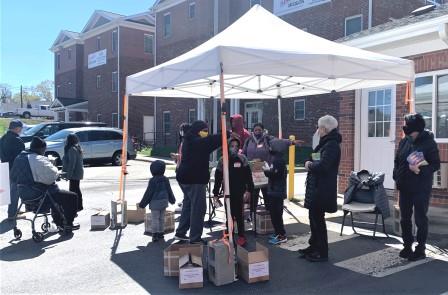
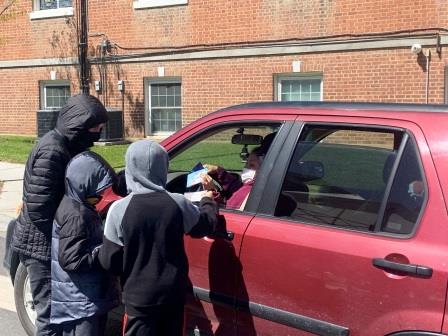
Held April 2nd Downtown Durham. Dozen Volunteers. Gospel. 100s of cars.
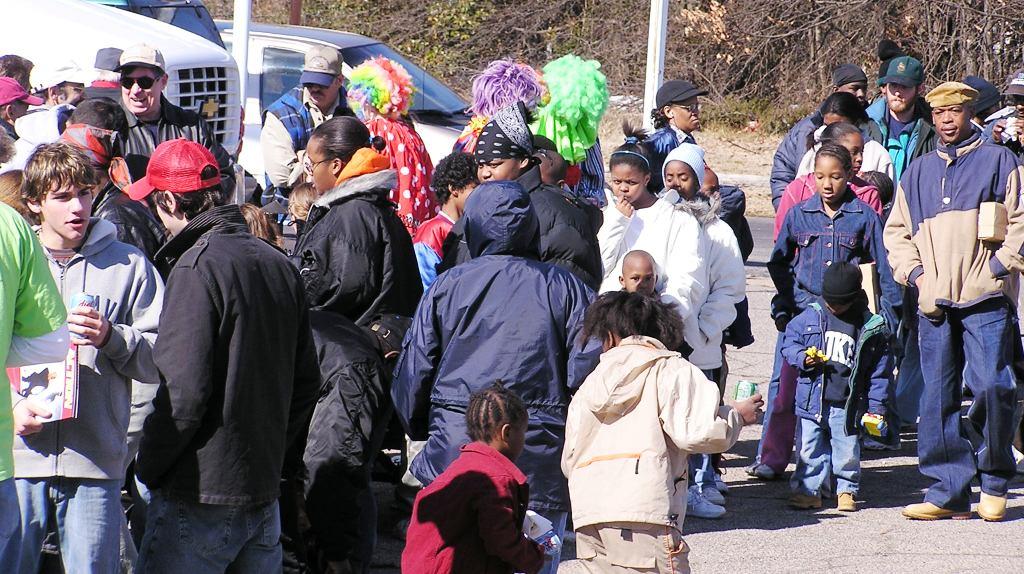
Recently, at the Easter drive-thru event, a dozen children and adults, who volunteered with CEF, distributed and ministered to city kids from Durham. Hundreds of Easter baskets, Gospel booklets and tracts were distributed. Families were reached and ministered to while in their cars. As a result of our friendships/partnerships with the Durham Rescue Mission and the City of Durham Community Engagement, six other neighborhoods were directly engaged and received the same items as during the drive-thru event. These items are pictured above and below. Each basket and booklet were given to city kids with a personal touch and prayerful ministry on April 2nd and 3rd.
Actually, over 6,000 city kids have been ministered to embracing the Gospel of Salvation during events like these this year and specifically during the past 6 months of the COVID pandemic. Since the Fall of 2020 until now, 6,636 have participated in various community-based, clubs, and event-type ministries that CEF Durham offers. Thanks for praying and for giving so that ministries like these can flourish, even during COVID restrictions as we’ve all endured.
Sponsors City Kids to attend our sports camps which emphasizes putting God first in every aspect of play and life. We build solid athletic skills and strong Christian character. Suggested: $100/kid
Palm Sunday is a Christian moveable feast that falls on the Sunday before Easter. The feast commemorates Jesus’ triumphal entry into Jerusalem, an event mentioned in each of the four canonical Gospels. Palm Sunday marks the first day of Holy Week, the last week of the Christian solemn season of Lent that precedes the arrival of Easter.
In the Bible, as well as from sources outside of the Bible, we see that the use of “palm branches” was often tied to “victory.” The Bible first shows us this in conjunction with the “Feast of Tabernacles.” As a part of this celebration, the Israelites were commanded by God to construct and live in “booths” (for 7 days), which were made from “the boughs of goodly trees, branches of palm trees, and the boughs of thick trees, and willows of the brook” (Lev 23:40)(also see: Neh 8:14-18). This was done to commemorate the way the people of Israel lived after God gave them “victory,” and brought them out of Egypt.
While not recorded in the Bible, history tells us that waving palm branches was also done to celebrate kings and conquerors. We also know that in Greek athletic competitions, victors were often given a palm branch, which they would wave to celebrate their “victory.” Palm branches are a part of Christian worship on Palm Sunday, or Passion Sunday, as it is sometimes called. This event commemorates Jesus Christ‘s Triumphal Entry into Jerusalem, as foretold by the prophet Zechariah.
Palm Branches on Palm Sunday
In the Bible, Jesus ‘ Triumphal Entry into Jerusalem with the waving of palm branches is found in John 12: 12-15 (see below); Matthew 21:1-11; Mark 11:1-11; and Luke 19:28-44.
Today Palm Sunday is celebrated one week before Easter, on the first day of Holy Week.
The first celebration of Palm Sunday in the Christian church is uncertain. A palm processional was recorded as early as the 4th century in Jerusalem, but the ceremony was not introduced into Western Christianity until the 9th century.
The Bible tells us that people cut branches from palm trees, laid them across Jesus’ path and waved them in the air as he entered Jerusalem the week before his death. They greeted Jesus not as the spiritual Messiah who would take away the sins of the world, but as a potential political leader who would overthrow the Romans. They shouted “Hosanna [meaning “save now”], blessed is he who comes in the name of the Lord, even the King of Israel!”
Cross made out of palm fronds… see how to make on YouTube
Jesus’ Triumphant Entry in the Bible
All four Gospels include the account of the Triumphal Entry of Jesus Christ into Jerusalem:
The next day, the news that Jesus was on the way to Jerusalem swept through the city. A large crowd of Passover visitors took palm branches and went down the road to meet him. They shouted, “Praise God! Blessings on the one who comes in the name of the Lord! Hail to the King of Israel!” Jesus found a young donkey and rode on it, fulfilling the prophecy that said: “Don’t be afraid, people of Jerusalem. Look, your King is coming, riding on a donkey’s colt.” (John 12:12-15)
Palm Branches Today
Today, many Christian churches distribute palm branches to worshipers on Palm Sunday, which is the sixth Sunday of Lent and last Sunday before Easter. On Palm Sunday, people remember Christ’s sacrificial death on the cross, praise him for the gift of salvation, and look expectantly to his second coming.
Customary Palm Sunday observances include the waving of palm branches in procession, the blessing of palms, and the making of small crosses with palm fronds.
Palm Sunday also marks the beginning of Holy Week, a solemn week focusing on the final days of Jesus Christ’s life. Holy Week culminates on Easter Sunday, the most important holiday in Christianity.
Happy St. Patrick’s Day / Lá Fhéile Pádraig sona duit (in the Irish language, also called Erse or Gaelic, Irish Gaeilge, a member of the Goidelic group of Celtic languages, spoken in Ireland) so, if your thinking whether you’ll get LUCKY or reach that pot of gold at the end of your rainbow on this special holiday, Níl aon bhaint ag Ádh mór le dul ann! (in English, Luck has nothing to do with getting there!).
Saint Patrick (Latin: Patricius; Irish: Pádraig[ˈpˠaːd̪ˠɾˠəɟ]; Welsh: Padrig) was a fifth-century Romano-British Christian missionary and bishop in Ireland. He was also known as the Apostle of Ireland. According to the autobiographical Confessio of Patrick, when he was about sixteen, he was captured by Irish pirates from his home in Britain and taken as a slave to Ireland. Was This Bad Luck? While a slave, he looked after animals; he lived there for six years before escaping and returning to his family. Was this Good Luck? After becoming a cleric, he returned to northern and western Ireland. The dates of Patrick’s life cannot be fixed with certainty, but there is general agreement that he was active as a missionary in Ireland during the fifth century.
In later life, he served as a bishop, but little is known about the places where he worked. By the seventh century, he had already come to be revered as the patron saint of Ireland. Saint Patrick’s Day is observed on March 17th, the supposed date of his death. It is celebrated inside and outside Ireland as a religious and cultural holiday.
Luck had nothing to do with the events in Patrick’s life, nor do they in yours. If you know Christ as Savior, you are redeemed back to God the Father and are a Saint as well, according to the Bible. On Saint Patrick’s Day we observe, celebrate, and remember how a young man dealt with evil and unfortunate life circumstances and became the man God had foreordained. From Scripture, we know of so many others like Patrick: Joseph, Jonah, Daniel, and Paul, to mention a few. As a result of God’s Will for Patrick’s life, many in Ireland and around the world were encouraged to press through adversity as well as to place their faith and hope in Christ Jesus for salvation and daily living.
You may be experiencing things in life that make you question your worth, luck, destiny, or even God Himself. Though we all live in a fallen/sinful world, God is always at work in your life as He was in Patrick’s. It’s not about LUCK or being LUCKY, but The Kingdom of God / Ríocht Dé expressed and experienced in the midst of the struggles, disappointments, and confusion of life. If you minister/work with city kids, then you know that it seems there is never any let up to problems and issues in their lives. Sometimes we wish for somewhere over the rainbow for these kids… Can’t they get aLUCKYbreak?
Níl aon bhaint ag Ádh mór leis! …again, Luck has nothing to do with it! Jesus said: “I will give you the keys of the kingdom [eochracha na ríochta] of heaven, and whatever you bind on earth shall be bound in heaven, and whatever you loose on earth shall be loosed in heaven.” Take the Keys of the Kingdom to the Gates of Hades, no LUCK needed, and lock up evil, demonic, and satanic mindsets of poverty, hatred, racism, low achievement, and on and on… And then, take those same powerful keys and unlock the Gates of Heaven; the Heart of God the Father; and express His Kingdom to city kids and others.
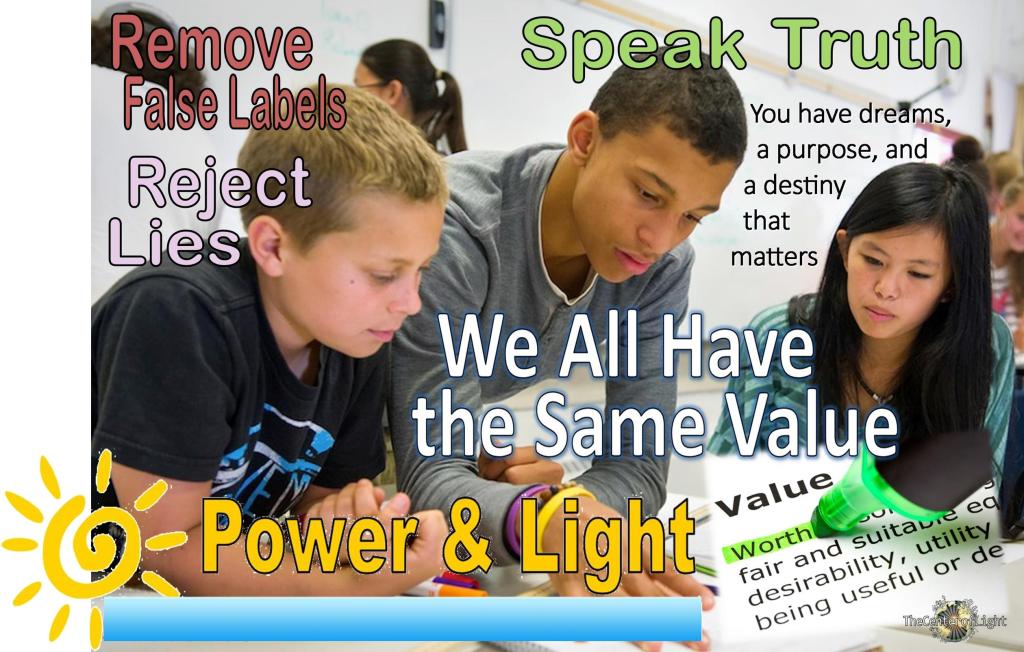
Speak the Truth that says: You matter! You are a gift to me! You are a delight to know and to be my friend! You make this world better! This world needs you! These are the expressions of the Kingdom, in which everyone needs to hear. This is the power that you possess to change your world and LUCK has nothing to do with getting there.
Matthew 16:18-19 "And I tell you, you are Peter, and on this rock I will build my church, and the gates of hell shall not prevail against it. I will give you the keys of the kingdom of heaven, and whatever you bind on earth shall be bound in heaven, and whatever you loose on earth shall be loosed in heaven.” ESV
These paradigms apply whether you’re ministering in a community, city, state or the world (nations). There are many testimonies from around the world, when the practical application of these principles are active, resulted in the Kingdom of God in operation on earth.
We are called to disciple nations, not just individuals. (Matt. 28:18-20)
The Marketplace, which is the heart of the nation, has been redeemed and now needs to be reclaimed. (Luke 19:1-10)
Every Christian is a minister, and labor is worship. (1 Tim. 2:1-8; Acts 20:34-35)
We are called to take the kingdom of God to where the gates of hell are for Jesus to build His Church. (Matt. 16:18)
Nation transformation must be tangible and the premier social indicator is the elimination of systemic poverty. (Gal. 2:10)
Ed Silvoso, Transform Our World, Harvest Evangelism
The Methodology is found in Luke 10:5-9
Pray and Bless: Speak peace to the people and the systems which influence/impact them (v.5)
Fellowship: Engage, listen, from learn from the people (v.7)
Minister: Address the felt needs in the Name of the Lord (v.9a)
Proclaim: Let it be known that the Kingdom of God is near (v.9b)
What are the possible next steps for you and your ministry?
Which paradigms do you readily identify with? Which principles speak to you most strongly?
Which paradigms need the most explanation and/or example of implementation?
How would you answer the question, “Tell me about the impact your church is having on your community?
What are some natural ways you can begin building bridges into your community?
Where do you sense is your first (or next) entry point into your community?
What are the internal / external barriers to entering into the life of your community?
Which agencies, ministries, or programs would make good “partner ministries” for your church?
What are some ways that you can “pray and bless” your city and/or community?
They are “gift‐centered” people. They see the “full half” in everyone.
They are well connected themselves. They have friendships and are active in their community’s life.
They are trusted and create new trusting relationships. The trust they have grows from the fact that they see the gifts of their neighbors, and they are willing contributors to their neighbors and the neighborhood.
They believe in the people in their community. They are not cynical, doubting observers of local residents. They know that their community is a place rich in resources.
And they are people who get joy from connecting, convening and inviting people to come together. They are not seeking to lead people. They know the power in joining people together.
The Spirit of God is at work. There is a good chance that the next great movement of God will involve putting the church back into community where it can be the leaven, salt and light God designed the church to be.
Next: 5 Pivotal Paradigms for biblical transformation – Pray – Bless – Fellowship – Minister – Proclaim
Expressing the Kingdom of God within your context!
What could this mean for your ministry BECOMING?
Inclusion and diversity of your staff, board, and/or committees
Cultural competencies for effective direct ministry
Engaging cross cultural communities with their access and favor
Personal reflection and biblical reconciliation where needed
Diversity Training is any program designed to facilitate positive group interaction, to address and reduce biases, prejudice, marginalization, discrimination, and generally teach individuals who are different from others how to work together effectively. However, not all such seminars, webinars, workshops, and/or training is the same.
From the broad corporate perspective: Diversity training is defined as raising personal awareness about individual differences in the workplace and how those differences inhibit or enhance the way people work together and get work done. This probably will include the dynamics of inclusion, where everyone is valued, respected, affirmed by having a voice, and feels like they matter. Each of these outcomes should be desired within all workplace and ministry settings.
Values-based diversity and inclusion training programs are designed encourage increased collaboration, enhance interpersonal skills, and empower everyone to become more productive. Studies found that companies and organizations which foster diversity and inclusion are 35% more productive. This certainly is true of a biblical Kingdom Building approach, which propels individuals and organizations towards proper alignment and right relationships with God and individuals.
How will a values-based Kingdom-expressing approach to diversity and inclusion be successful?
Develops an understanding of biblical diversity and inclusion with an emphasis on expressing the Kingdom of God on earth
All training sessions are tailored to fit the organization’s mission, objectives, and goals
There’s an expectation to dig deeper and become open to vulnerability and taking risks to express the Kingdom of God
Organization’s commitment to extend training and measurable diversity engagement over increments of time
Identifying your diversity, inclusion, or collaborative needs for successful engagement
Open and honest conversations with your team, chapter, and/or organization is essential for addressing and tackling the complex, under-served, or neglected topics of diversity, inclusion, race, gender, etc. Here are a few common subject matters, which might help your organization identify your needs for successfully engaging diversity.
Affirming true value of people
Asset-based collaboration
Challenges and Goals
Cultural Competence
Conversations and Discussions
Changing Spiritual Atmosphere
Education and Discipleship
Changing mindsets and attitudes
Partnerships with sustained action
Next: Kingdom Formation and Expression What could this mean for your ministry?









 John Blake shares his "Heart for City Kids"