You are currently browsing the category archive for the ‘Personal Development’ category.
Rejection and Realization
From a systemic and spiritual perspective, I will attempt to reveal the roots of despair and decline in marginalized, resourced-challenged, or poor communities (whichever categorical term works for you). Due to attitudes of condemnation, misplaced compassion, and frankly, ignorance, a sick, broken, generational system of living in hopelessness has taken root.

What’s the Problem: God – Not God Himself, but a rejection of God by indigenous people of these communities and those in power who control and manage these communities. As a result, deteriorating social and economic conditions prevail. Systemic poverty, in every area of life, becomes the norm. Thus, their struggle, our struggle, even collectively our struggle is not only in the natural, but a spiritual battle, which needs a supernatural solution. (Ephesians 6:12)The struggle should not be with our fellow man.
Poverty in every area of life is the result when God is rejected (examples: Nigeria, Europe, US inner cities, etc.). Where do you see this in our own city? What’s wrong with the pictures portrayed by city, neighborhood, or school officials in your city? (example: movie – “A Christmas Carol” and other media depicting poverty). Poverty is often a source of alienation; inequity breeds anger; destructive survival and negative behavior pull families down. Satan’s plan is very effective! Christians must view this condition with the mind of Christ.
Spiritual poverty produces hardship in every area of life. Especially for children and the poor. Are they not the most vulnerable? There must be a realization that unless city kids are affected by the Gospel and change begins early in life, the probability is that they will be pulled into the same generational cycle of crime, poverty, and ungodliness.
Regarding your ministry with children, respond to the following: State your purpose in ministry? For what purpose do you live/exist? Luke 10:27-28 State your most important cause – Something that’s worth dying for… (your values and passions) Do you have a cause? State the ways you connect with kids – Nurture and care for the children you teach; equip them for living; hug them; build them up on the inside; most of their outsides are spoiled. How do city kids respond to you?

Next Part 5: Forgiveness, Redemption, and Resolution with Godly Values, Vision, and Resources
This is the 3rd part of a series on Developing a Heart for the City and City Kids. Part 1 (below) began on April 16, 2019. There will be a total of seven parts to complete this presentation and discussion. Additional topics and resources related to teaching city kids can be found at CEF Durham and The Center of Light as well as this blog.
As I asked in part 2, How would you or will you respond? Perhaps a better question for a better discussion would be, How do you respond when confronted about social, systemic, and spiritual issues in the city? How have your responded in the past. Civic and Christian leaders have grappled with these questions and issues for many years. We, in CEF, have talked and strategized over these things for the past 20-30 years. Some progress was made towards being more reflective, in our literature, of the multi-ethnic children we teach. A few changes were also made in our teaching methods, which made an impact on our teaching curriculum and teacher training of the main CEF ministry programs — Good News Clubs and 5-Day Clubs.
Typical responses
How have your responded in the past? Here are a few general, but typical responses to the needs within the city.
Condemnation: Having attitudes, which say, ‘They deserve what they get. Why don’t they get a job? Well, Jesus even said that the poor will always be with us. How can they live like that? Don’t they care? Look how dirty those kids are?
Cultural Chasm: Feelings of alienation pulling you back from the city. This is a humanly cultivated apprehension because of being culturally distant and different from those in the inner city. Cultural competencies are weak.
Curiosity: Attracted to a fabricated danger, risk-taking adventure, it’s cool, or a self-centered glorification by going into the ‘hood’ and doing good deeds. Picture-taking for personal benefit and conversations.
Compassion: God-centered and inspired attitude, which causes your heart to love, care, reach out, hang out, and be enriched by those in the city.
Heart reflections
Your responses are a starting point, now reflect on what your heart allows you to see. To develop a heart for the city and city kids, you must look at…
Broken Lives: Have you seen any difficulty loving the people of the city? Increasingly, the poor have become nameless, faceless statistics. The poor are no longer our next-door neighbors, nor do they sit in the pew beside us. They may be seen as the object of our outreach, but not as valuable, powerful, world-changers within their community… or our friends.
Neglected Families: Have you seen pain in the eyes of children? Have you seen children of the inner-city being neglected? Do you appreciate the reason why? Many youth must care and defend themselves and their siblings, provide safety for their families, experience the lack of adequate life skills, yet have lots of street smarts, and are victims of few on-going programs to nurture and equip them for healthy living and decision making.
Negligent City Sectors: Have you seen the results of negligent parents, schools, churches, communities, ministries, and government agencies? When these city sectors are also broken, inadequate, and unsure of how to take action, you have a recipe for disaster and devastation. When evangelicals left the city both physically and spiritually, the turf was conceded to government agencies, liberal agendas, ignorant and irrelevant churches, broken families, etc. The salt and light, Jesus talked about, was mostly removed from the city… and the enemy devoured it.
…if the foundations are destroyed, what can the righteous do?… Psalm 11:3-7
What are the foundations broken and why?
- Family broken — Too much selfishness and arrogance
- Religion broken — Too little passion to help the community
- Schools broken — Lack of wisdom
- Communities broken — Fear
- Society broken — Darkness
In this day and age, given the context of need in our cities, given the separation by race, culture, politics, and social issues that exists… given our history in this country — what would Jesus have us do?
Coming in part 4: Rejection and Realization a Reality Check
Go deeper with a few suggested books:
1. In His Steps by Charles Sheldon
2. Let Justice Roll Down by John M. Perkins
3. Toxic Charity by Robert Lupton
4. One Blood by John M. Perkins
5. Reconstructing the Gospel by Jonathan Wilson-Hartgrove
If Jesus were walking with us today and asked, “What do you see? Do you see the need, the depths of despair, and pain?” The Lord would be asking you to look, where? How would you respond?
Biblical Response
According to the Bible, the heart of God responds to the disadvantaged with active compassion. This is the heart of pure/true religion. Compassion is all about connecting with the helpless condition of the hurting world. The spiritual and physical needs of this world are great. Look around, where are the greatest needs? Who is suffering the most? If you are called to Christ, you are called to compassion. What is your response?

Only through the Power of God, the Word of God, and our intentional decision to practice the Heart of God can we develop a heart for the city and its people. Developing a heart for the city and its people means being called to Christ and called to compassion.
…be doers of the Word and not hearers only… but a doer who acts… [control your tongue, care for the afflicted, keep oneself unstained by the world, show no partiality… this true religion]
James 1:23-2:13
Jesus said the people in cities and villages were ‘harassed, weary, or distressed’ meaning: to be flayed open, in hopeless despair, thrown down, to be at the end of oneself – the recurring effects of those who are ‘harassed’ can be pictured as a rock is thrown onto a pond, which results in a seemingly never-ending cycle of ripples and rings, thus illustrating the downward spiral of discouragement and hopelessness felt by the poor and disenfranchised. Jesus was moved with compassion. He saw beyond external appearances into the hearts of the people. He saw that they were unprotected, unsaved, and unguided. Jesus said to pray that God’s people will enter into the pain and suffering of those harassed.
…When he saw the crowds, he had compassion for them, because they were harassed and helpless, like sheep without a shepherd…
Matthew 9:35-38
Your Response
When you walk down the streets of our cities, when you drive threw neglected, despairing, destitute neighborhoods, when you see crowds of people… How deeply do you see? Are you moved with compassion or revulsion? How would you respond? It is possible for you to do the right thing for the wrong reason or to do the wrong thing for the right reason. How will you respond?
Look at the statistics:
Ray Bakke reminds us in A Theology as Big as the City, “The frontier of missions has shifted to the cities. The greatest number of unreached people is no longer geographically distant but rather culturally distant. You must realize that the nations of the world are coming to the city.“ Today in a new millennium, missions has dramatically shifted in many ways, including from safe to dangerous, from receptive to hostile people groups, from villages and jungles to urban/city jungles. The 2000 U.S. Census revealed: 55-80% of the country’s population lives and will be living by 2050 in metro/urban areas. U.S. now reports, as of 2017, 75-85% of families with children are living in the largest US cities and urban metro areas.
Look at the trends:
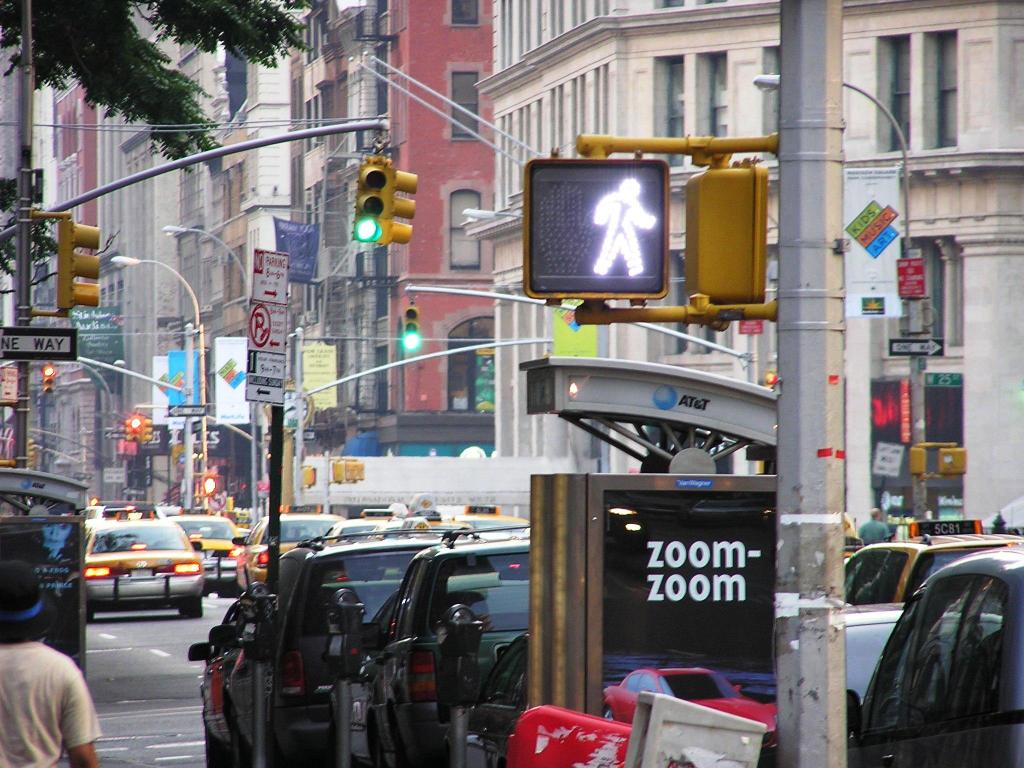
Everything from music to fashion, language and politics is dominated by urban trends, says Bob Bufford of Leadership Networks. Sociologists, market analysis, and government officials pay close attention to what happens in urban America. What happens there will influence what happens everywhere.
Look at the task:
There is no easy, painless or inexpensive way to minister in the city today. Urban ministry is nearly always cross-cultural and calls us beyond ourselves into uncharted territory (Psalm 107:23-24). But city ministry is critical! D.L. Moody said, “Water runs downhill, and the highest hills are the great cities. If we can stir them, we shall stir the whole country.”
Look at the Word:
To practice obedience to the Word of God and participate in contemporary missions, we must go inside the city. We must cross, not only an ocean and a continent, but the street with the changeless Gospel. The entire Scriptures, including Jesus earthly ministry, demonstrates this imperative.
Look at the Church:
Where is the Church in regard to this mission field? Do our methods, ideas, and attitudes really impact today’s urban kids? Do they produce devoted disciples for Christ? In Dare to Love the Ghetto, Keith Phillips tells about one particular church, “They took five or ten black boys from the inner-city for a week of camping experience, stuffed them full of the gospel, meticulously recorded each decision and then pitched them back into the ghetto with these words of comfort: God bless you! We’ll send follow-up materials by mail. Hope everything works out.”
How would you respond to the above question: What do you see…? In the next part of Developing a Heart for the City, to be published, consider your responses by these questions:
1. Can you see the Heart of the Father?
2. What does the Bible say about reaching cities?
3. How deeply do you see and is your heart moved for city kids?
John E. Blake
 John Blake shares his "Heart for City Kids"